
The one pagethat tells the truth.
Every vehicle at a Japanese auction is graded by an independent inspector. That grade — and the diagram beside it — is where you find the real story. Here's how I read them, in plain language.
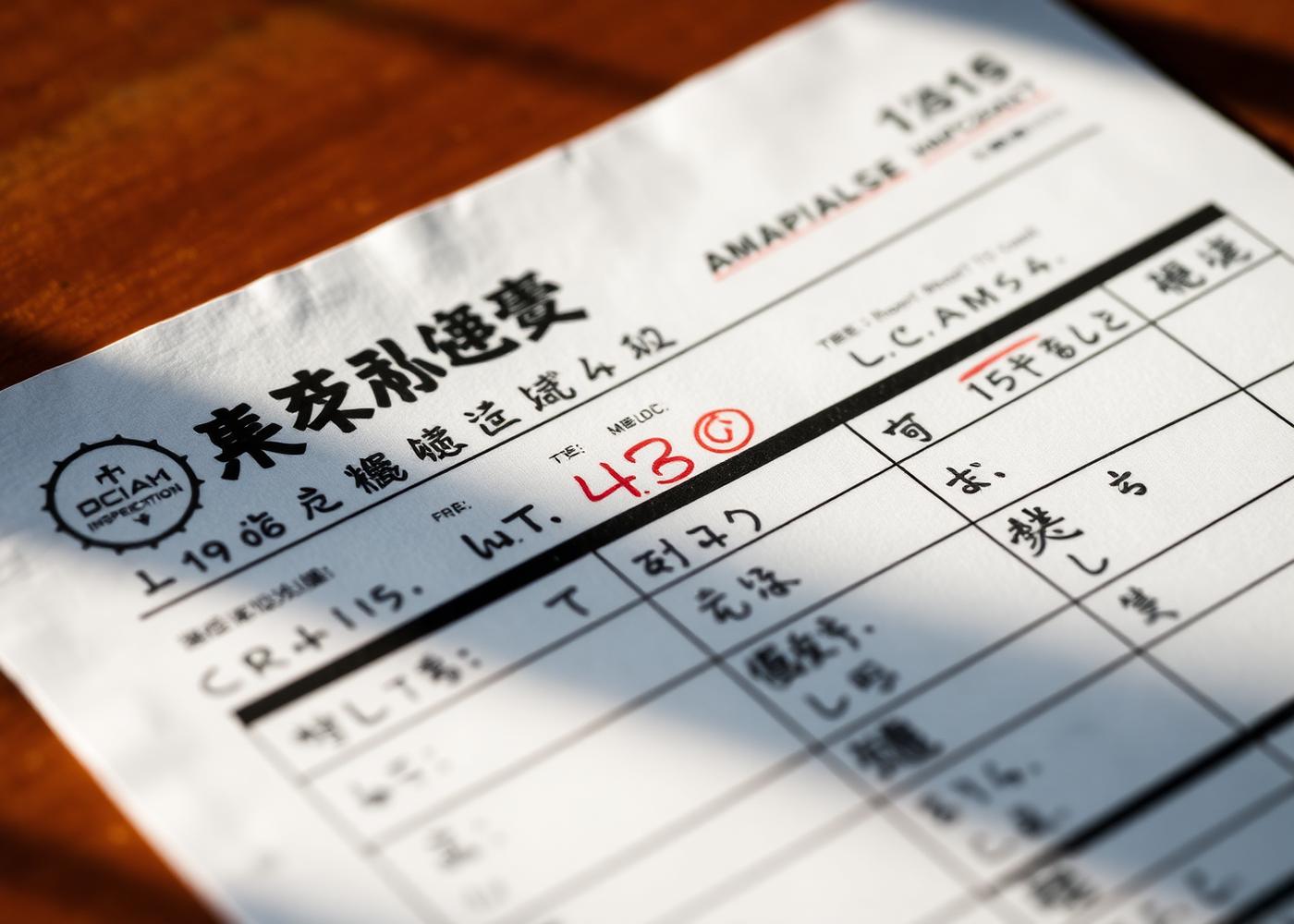
The number in the top corner.
This single figure is the inspector's overall assessment. Most export-quality cars land between grade 4 and 4.5.
- SAs-new. Under 1 year old, very low mileage, no issues.
- 6Effectively new — under 10,000 km, unregistered or barely used.
- 5Excellent condition, minor cosmetic use.
- 4.5Above-average condition, mild wear.
- 4Average condition — the workhorse grade of exports.
- 3.5Below-average condition, noticeable wear or minor damage.
- 3Rough — needs work. Approach with caution.
- R / RARepaired accident vehicle. R = major repair, RA = light repair.
- ***Non-graded, incomplete history or otherwise flagged.
The letterson the car diagram.
The car diagram uses shorthand for each mark. XX (replaced panel) and W (previous repair) are the ones you want to read carefully.
Cross-checked,not just quoted.
Mileage verification
I check the sheet mileage against the maintenance record and, when available, Japan's registration history — a mismatch is where fraud usually shows up.
Accident history
R and RA cars can still be honest buys, but only when the repair scope is clearly documented. I ask for the underlying inspection notes before we go.
Chassis & VIN
I confirm the chassis stamp matches the paperwork and that the model code is what your destination country will accept for registration.
Auction-house grade drift
Different houses grade slightly differently. I know how each one calibrates, so a 4.5 from one house means the same thing as a 4 from another when it should.